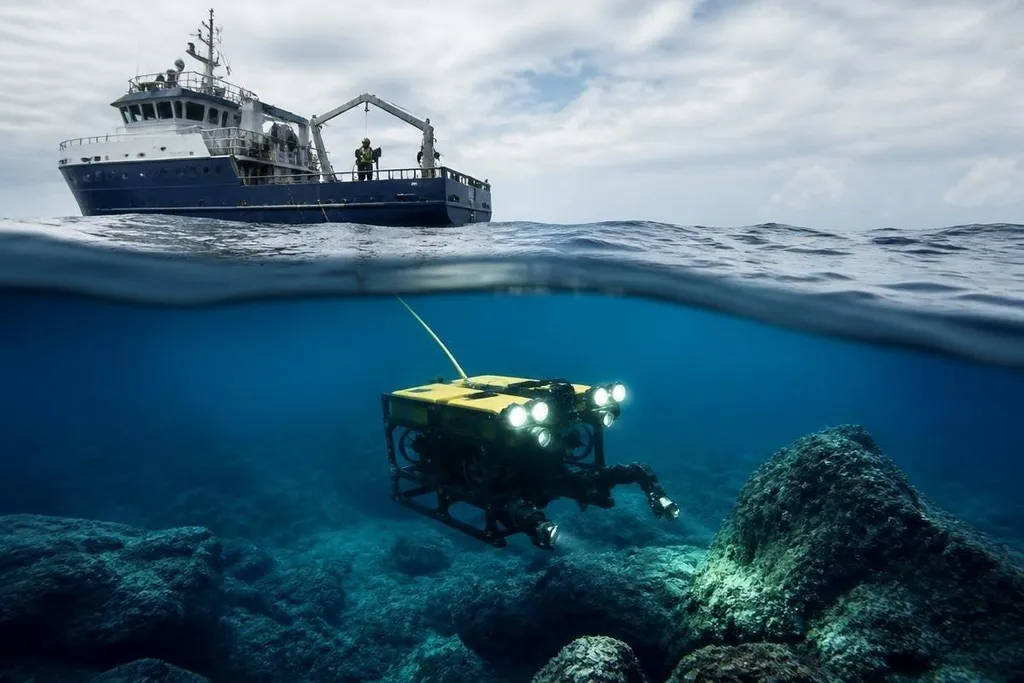
A robot can send a camera into crushing water pressure, carry sensors across another planet, or move through a narrow space inside the human body. That reach gives scientists measurements from places where people cannot work safely, or cannot work at all.
Quick read
- Robots put cameras, sensors, and sampling tools into dangerous spaces.
- Remote control works well nearby; distant missions need onboard decision-making.
- A useful robot must return trustworthy data, not only reach a difficult place.
Reaching places humans cannot
The first job is physical access. An underwater robot can travel below the depth where divers can work, while a planetary rover can move across ground that has no air, roads, or shelter for people.
Scientists choose the robot around the question they need to answer. A camera may record animal behavior without a nearby observer. A robotic arm can collect a rock or soil sample. A sensor package can measure pressure, temperature, gases, or movement over time.
That setup changes the work that follows. Instead of asking what a place looks like from a distance, a research team can compare samples, map a route, or watch a process as it happens. The robot becomes the link between a person at a control station and a site that person cannot enter.
Small robots can reach places that larger machines cannot. A tracked vehicle may cross rough ground, while a soft or snake-like robot can pass through narrow gaps.
Inside the body, medical robots use thin tools and cameras to work through small openings, though that work requires strict safety controls and trained medical teams.
Remote control has limits
Distance changes the control problem. An operator can steer an underwater vehicle when its camera feed arrives with little delay. On another planet, the robot cannot wait for a person to guide every turn, because signals take time to travel between Earth and the robot.
That is why distant robots need onboard software. The software can help the robot detect obstacles, keep a planned route, or decide when a measurement is good enough to save. People still choose the research goal and review the data, but the robot handles small decisions between commands.
Autonomy brings a trade-off. After a communication break, the robot may keep working, yet it may also make a wrong choice that an operator would have corrected. Scientists need logs, images, sensor readings, and clear records of each action so they can judge the result later.
For scientists comparing autonomous systems, dated reports on named robots can put a machine’s task, test setting, and result beside the maker’s claim. Robot24.com reports on named robots give that comparison a record to examine when the evidence comes from logs and sensor data, not a short demo.
Data matters more than the stunt
A robot reaching a hard location makes a good demonstration, but access alone does not answer a scientific question. The instruments must measure the right thing, and the team must know how accurate those measurements are.
A camera can show a surface without proving what lies beneath it. A sample can answer more questions, but collecting it may change the material or mix it with dust from the robot. Even a clean-looking data set needs records of sensor limits, calibration, power use, and the path taken.
The robot also has to survive long enough to finish the work. Water can damage electronics. Dust can enter joints. Cold can reduce battery output. Heat, radiation, and rough ground can limit a machine long before its software fails.
I'd call these missions hard rather than impossible, because the robot only moves the boundary of what people can measure.
A practical choice guide
Use this checklist before selecting a robot for a research task:
- Name the measurement: decide which sensor or sample will answer the research question.
- Map the route: mark narrow spaces, steep ground, water depth, signal limits, and return paths.
- Set the control mode: choose direct operation, supervised autonomy, or onboard decisions for long delays.
- Plan for failure: state what the robot should do after lost contact, low power, or a blocked route.
- Check the data record: require timestamps, sensor status, calibration details, and stored operator commands.
- Plan recovery: decide how the team will retrieve the robot, sample, or data if the mission stops early.
This guide keeps the machine tied to the research question. A robot that reaches a remote site but returns weak or uncertain data has not solved the problem.
The next useful step is a smaller field test in a place the team can inspect directly. If the robot's readings match known measurements there, the same design has a sounder case for work beyond human reach.